Showing posts with label handout. Show all posts

Sunday, February 1, 2026

Handout for “The Role of the Agent”

This is the on-line handout for a clinic entitled “The Role of the Agent.” The purpose is to provide documentation of the various published items shown in the talk, along with links to a number of blog posts which cover some points in the talk in much more detail. They are grouped below by topic area. 

My point in the clinic was to indicate that many of us enjoy trying to operate model railroads in a prototypical manner, as in the photo below (Seth Neumann at left, and Steve Van Meter, switching at Ballard on my layout). I attempted to indicate how we can go about such imitation of the prototype, choosing the specific railroad that I model, the Southern Pacific.

Print Publications

Armstrong, John H., The Railroad – What It Is, What It Does (Chapter 8, Railroad Operations), Simmons-Boardman Publishing, Omaha, 1982. [there are several subsequent editions with updates; the original is closest in time to the era I model] 

Benezra, Steve, and Phil Monat, editors, A Compendium of Model Railroad Operations, Operations Special Interest Group, Downington, PA, 2017.

Coughlin, E.W., Freight Car Distribution and Handling in the United States, Car Service Division, Association of American Railroads, Washington, 1956.

Grant, H. Roger, The Station Agent and the American Railroad Experience, Indiana University Press, Bloomington, 2022. 

Koester, Tony, “In search of the perfect waybill,” Model Railroader, February 2012, p. 82.

Thompson, Anthony, “Prototypical waybills for car card operation,” Railroad Model Craftsman, December 2009, pp. 71–77.  

Thompson, Tony, “Getting Real: A More Prototypical Waybill for Model Railroads,” Model Railroad Hobbyist, pp. 31–46, May 2012. 

Thompson, Tony, ”Getting Real: Operating with Prototypical Waybills,” Model Railroad Hobbyist, January 2018.  

Thompson, Tony, “Modeling Traffic on a Layout,” Model Railroad Hobbyist, September 2021.  

SP Circular 39-1, “Instructions to Station Agents”

Thompson, Tony, “SP’s Instructions to Station Agents,” https://modelingthesp.blogspot.com/2016/11/sps-instructions-to-station-agents-part.html

Thompson, Tony, “SP’s Instructions to Station Agents, Part 2,” https://modelingthesp.blogspot.com/2016/11/sps-instruction-to-station-agents-part-2.html

Thompson, Tony, “SP’s Instructions to Station Agents, Part 3,” https://modelingthesp.blogspot.com/2016/12/sps-instructions-to-station-agents-part.html

Thompson, Tony, “SP’s Instructions to Station Agents, Part 4,” https://modelingthesp.blogspot.com/2016/12/sps-instructions-to-station-agents-part_10.html

Thompson, Tony, “SP’s Instructions to Station Agents, Part 5,” https://modelingthesp.blogspot.com/2016/12/sps-instructions-to-station-agents-part_25.html

Learning from Circular 39-1

Thompson, Tony, “Waybills, Part 88: Temporary Waybills,” https://modelingthesp.blogspot.com/2021/08/waybills-part-88-temporary-waybills.html

Thompson, Tony, “Waybills, Part 90: SP Form 704,” https://modelingthesp.blogspot.com/2021/09/waybills-part-90-sp-form-704.html

Bill Boxes

Thompson, Tony, “Bill Box,” https://modelingthesp.blogspot.com/2012/03/bill-box.html 

Thompson, Tony, “Modeling Bill Boxes,” https://modelingthesp.blogspot.com/2019/05/model-bill-boxes.html 

Salamon, Dave, N-Scale Magazine, issue for September-October 2017. 

Other Points

Thompson, Tony, “Southern Pacific’s Circular 4,” https://modelingthesp.blogspot.com/2025/12/southern-pacifics-circular-4.html  

Thompson, Tony, “Waybills, Part 39: SP Typography,”  https://modelingthesp.blogspot.com/2015/04/waybills-part-39-sp-typography.html

With the help of these and many other publications out there, we can hope to capture the spirit of moments like the one below, with the C&NW agent (right) at Brookings, South Dakota, exchanging a roll of waybills with the conductor on the caboose in a light snow (H.R. Grant collection, 1940).  

Tony Thompson 

Thursday, January 8, 2026

Handout for “Modeling SP Operations”

This is the on-line handout for a clinic entitled “Modeling SP Operating Practices.” The purpose is to provide documentation of the various published items shown in the talk, along with links to a number of blog posts which cover some points in the talk in much more detail. They are grouped below by topic area.

My point in the clinic was to indicate that many of us enjoy trying to operate model railroads in a prototypical manner, as in the photo below (Pat LaTorres at left, and Ed Slintak, switching at Ballard on my layout). I attempted to indicate how we can go about such imitation of the prototype, choosing the specific railroad that I model, the Southern Pacific.

Print Publications

Armstrong, John H., The Railroad – What It Is, What It Does (Chapter 8, Railroad Operations), Simmons-Boardman Publishing, Omaha, 1982. [there are several subsequent editions with updates; the original is closest in time to the era I model] 

Coughlin, E.W., Freight Car Distribution and Handling in the United States, Car Service Division, Association of American Railroads, Washington, 1956.

Grant, H. Roger, The Station Agent and the American Railroad Experience, Indiana University Press, Bloomington, 2022. 

Koester, Tony, “In search of the perfect waybill,” Model Railroader, February 2012, p. 82.

Niemann, Linda, Boomer, University of California Press, Berkeley, 1990.

Rehwalt, Dan, Westsider, Grizzly Press, Oakridge, OR, 2004.

Sprau, David, and Steven King, 19 East, Copy Three, Operations Special Interest Group, WoodDale, IL, 2013, 

Thompson, Anthony, “Prototypical waybills for car card operation,” Railroad Model Craftsman, December 2009, pp. 71–77.  

Thompson, Tony, “Getting Real: A More Prototypical Waybill for Model Railroads,” Model Railroad Hobbyist, pp. 31–46, May 2012. 

Thompson, Tony, ”Getting Real: Operating with Prototypical Waybills,” Model Railroad Hobbyist, January 2018.  

Thompson, Tony, “Modeling Traffic on a Layout,” Model Railroad Hobbyist, September 2021.  

SP Circular 39-1, “Instructions to Station Agents”

Thompson, Tony, “SP’s Instructions to Station Agents,” https://modelingthesp.blogspot.com/2016/11/sps-instructions-to-station-agents-part.html

Thompson, Tony, “SP’s Instructions to Station Agents, Part 2,” https://modelingthesp.blogspot.com/2016/11/sps-instruction-to-station-agents-part-2.html

Thompson, Tony, “SP’s Instructions to Station Agents, Part 3,” https://modelingthesp.blogspot.com/2016/12/sps-instructions-to-station-agents-part.html

Thompson, Tony, “SP’s Instructions to Station Agents, Part 4,” https://modelingthesp.blogspot.com/2016/12/sps-instructions-to-station-agents-part_10.html

Thompson, Tony, “SP’s Instructions to Station Agents, Part 5,” https://modelingthesp.blogspot.com/2016/12/sps-instructions-to-station-agents-part_25.html

Learning from Circular 39-1

Thompson, Tony, “Waybills, Part 88: Temporary Waybills,” https://modelingthesp.blogspot.com/2021/08/waybills-part-88-temporary-waybills.html

Thompson, Tony, “Waybills, Part 90: SP Form 704,” https://modelingthesp.blogspot.com/2021/09/waybills-part-90-sp-form-704.html

Other Points

Thompson, Tony, “Southern Pacific’s Circular 4,” https://modelingthesp.blogspot.com/2025/12/southern-pacifics-circular-4.html  

Thompson, Tony, “Waybills, Part 39: SP Typography,”  https://modelingthesp.blogspot.com/2015/04/waybills-part-39-sp-typography.html

Thompson, Tony, “SD&AE Locomotives on the SP,” https://modelingthesp.blogspot.com/2020/03/sd-locomotives-on-sp.html

With the help of these and many other publications out there, we can hope to capture the spirit of moments like the one below, the operator at Vincent, California, handing up orders to eastward freight 804 (Richard Steinheimer photo).  

Tony Thompson 

Wednesday, March 26, 2025

Handout for “SP freight cars you can model”

This handout is intended to provide the factual background, and information about further sources of information, for my talk with the same title as this post. First, here is an outline of the talk.

Introduction
    Proportions and characteristics of the SP fleet of freight cars

   The following graphs are illustrative; you can click on the image to enlarge it.

  SP’s car classification scheme

Modeling of individual car types
    Gondolas
    Tank cars
    Box and automobile cars
        A simple description of the six body styles among the 15 classes of box cars
        Models of each body style
        The same scheme for automobile cars
    Flat cars, of several types
    Hopper cars
    Stock cars
    Cabooses 

Throughout the talk, I tried to mention primarily currently available models, though noteworthy older ones, such as Sunshine kit, are worth knowing about in case you can acquire examples. Searching eBay from time to time can yield desirable results. Also, a number of the models I showed, though perhaps not available at the moment, are re-issued by their makers from time to time. My understanding is that the very nice Walthers SP wood caboose is among them.

I explained in the talk, and want to list here, the primary sources of information and photographs for both this talk and for my modeling. These are the five volumes I published about SP freight cars.

Thompson, Anthony W., Southern Pacific Freight Cars, Volume 1: Gondolas and Stock Cars, Signature Press, 2002.

Thompson, Anthony W., Southern Pacific Freight Cars, Volume : Cabooses, Signature Press, 2002.

Thompson, Anthony W., Southern Pacific Freight Cars, Volume 3: Automobile Cars and Flat Cars, Signature Press, 2004.

Thompson, Anthony W., Southern Pacific Freight Cars, Volume 4: Box Cars, Signature Press, 2006, revised edition, 2014.

Thompson, Anthony W., Southern Pacific Freight Cars, Volume 5: Hoppers, Covered Hoppers, Tank Cars, Signature Press, 2008.

Here are some additional sources that may be helpful:

Thompson, Tony, “Modeling SP Flat Cars,” Model Railroad Hobbyist, issue for December 2024.

My blog contains many, many posts about SP freight cars It is found at this address: modelingthesp.blogspot.com , and with the search box at the upper right of each post, you can search for specific freight car types.

Kitbashing the Class A-50-17 automobile car, https://modelingthesp.blogspot.com/2015/01/modeling-sp-class-50-17-conclusion.html 

Tony Thompson

Wednesday, January 8, 2025

Handout for “Realistic Operation” clinic

The clinic is aimed at describing and illustrating my ideas of what it means to conduct realistic operations on a layout, whether large or small. In the clinic, I show numerous examples of realistic layouts; a number of examples of prototypical paperwork as developed for use by model railroaders; and show a number of real railroad jobs that an serve as prototypes for layout operating jobs. As a single example, one might think about the yard office clerk, chalking switching directions (not graffiti!) on a freight car. This photo is from the Richard Hendrickson collection.

For layout appearance, few would disagree with a choice of a view of operations at Caliente on the La Mesa Club’s famous Tehachapi layout.

I wrapped up my recommendations with several illustrations of how I have followed these ideas in developing the operating procedures on my own layout. Shown below are links to some blog posts of mine, with background about all this. In addition, I have included below a number of background links to internet resources, as well as a complete list of published material shown or mentioned in the clinic. As I usually do nowadays,  this handout is on-line only, so that the numerous internet resources are readily accessed.  

I will begin with links to three posts to my blog, which touch on the three principles I mentioned for realistic operation.

https://modelingthesp.blogspot.com/2024/11/realistic-layout-operation.html

https://modelingthesp.blogspot.com/2024/12/realistic-layout-operation-part-2.html

https://modelingthesp.blogspot.com/2025/01/realistic-layout-operation-part-3.html

Next is a listing of books and articles shown or mentioned in the clinic.

Armstrong, John H., The Railroad – What It Is, What It Does (Chapter 8, Railroad Operations), Simmons-Boardman Publishing, Omaha, 1982. [there are several subsequent editions with updates; the original is closest in time to the era I model] 

Bedwell, Harry, The Boomer, University of Minnesota Press, Minneapolis, 2006.

“Boomer Pete,”see under Kalmbach, A.C.

Chubb, Bruce, How to Operate Your Model Railroad, Kalmbach Books, Milwaukee, 1977.

_______, Compendium of Model Railroad Operations, Operations Special Interest Group, Downingtown, PA, 2017.

Coughlin, E.W., Freight Car Distribution and Handling in the United States, Car Service Division, Association of American Railroads, Washington, 1956.

Ellison, Frank, “The Art of Model Railroading,” six-part series in Model Railroader, 1944; reprinted in 1964, August to January 1965.

Ellison, Frank, Frank Ellison on Model Railroads, Fawcett Books, Greenwich, CT, 1954.

Fisher, Ralph E., Vanishing Markers, Stephen Greene Press, Brattleboro, VT, 1976.

Kalmbach, A.C. (writing as “Boomer Pete”), “Realistic Operation,” Model Railroader, March 1939, pp. 127–130.

Kalmbach, A.C. (writing as “Boomer Pete”), How to Run a Model Railroad, Kalmbach, Milwaukee, 1944 (revision of earlier book, Operating a Model Railroad, 1942).

Koester, Tony, “In search of the perfect waybill,” Model Railroader, February 2012, p. 82.

Koester, Tony, Realistic Model Railroad Operation, Kalmbach, Waukesha, WI, 2003 (2nd edition, 2013).

Morgenstern, Wes (Ed.), Working on the Western Maryland, Western Maryland Historical Society, Union Bridge. MD, 1999.

Morgenstern, Wes,and Leo Armentrout (Eds.), Working on the Western Maryland, Volume II, Western Maryland Historical Society, Union Bridge. MD, 2011. 

Niemann, Linda, Boomer, University of California Press, Berkeley, 1990.

_______, Railway Accounting Rules, Accounting Division, Association of American Railroads, Washington, 1950. [numerous editions exist; this one suits my era]

Rehwalt, Dan, Westsider, Grizzly Press, Oakridge, OR, 2004.

Roxbury, L.E., Let’s Operate a Railroad, High-Iron Publishers, Warwick, VA, 1957.

Smith, Doug, “The latest word on card operations,” Model Railroader, December 1961, pp. 52–62.

Sprau, David, and Steven King, 19 East, Copy Three, Operations Special Interest Group, WoodDale, IL, 2013, 

Thompson, Anthony, “Prototypical waybills for car card operation,” Railroad Model Craftsman, December 2009, pp. 71–77.  

Thompson, Tony, “Getting Real: A More Prototypical Waybill for Model Railroads,” Model Railroad Hobbyist, pp. 31–46, May 2012. 

Thompson, Tony, ”Getting Real: Operating with Prototypical Waybills,” Model Railroad Hobbyist, January 2018.  

Finally, several on-line articles by me, touching on the topics of the clinic.

Thompson, Anthony, “Contents of a Waybill,” The Dispatcher’s Office, Vol. 16, No. 2, pp. 17–24, April 2010.
[corrected version available at: modelingthesp.blogspot.com/2011/01/waybills-2.html ]

Thompson, Anthony, “Freight Car Handling and Distribution,” The Dispatcher’s Office, Vol. 17, No. 4, pp. 28–31, October 2011.
[corrected version available at: modelingthesp.blogspot.com/2011/09/my-article-in-dispatchers-office.html ]

Thompson, Anthony, “Progress with Prototypical Waybills for Modelers,” The Dispatcher’s Office, Vol. 22, No. 4, pp. 26–33, October 2016.
[corrected version available at: modelingthesp.blogspot.com/2017/11/yet-another-correction-of-dispatchers.html ]

Thompson, Tony, “Choosing and Modeling an Era,” https://modelingthesp.blogspot.com/2011/04/choosing-and-modeling-era.html

Thompson, Tony, “Handout: Operating like the Prototype,” https://modelingthesp.blogspot.com/2023/05/handout-operating-like-prototype.html

I hope presenting these resources on-line in this way will be at least as helpful as a paper handout, and in my opinion more convenient to use.

Tony Thompson


Saturday, May 27, 2023

Handout: operating like the prototype

This is a new talk handout, intended to provide citations to many of the printed and on-line resources mentioned in the talk with the same title as this post, along with links to those on-line. Listed below are all the published sources and cited articles from the talk, for those wishing to examine any of them further. 

In the talk, I reviewed some hobby history, and spent time discussing the contributions of Frank Ellison, John Allen, and Allen McClelland to the understanding we have today, of what a layout can be and how it can be operated. As it happens, I have written blog posts over the years about all three of those gentlemen, and links to those posts are included below.

I tried to comment on how and why we see so many truly complete layouts today, like the scene below on John Breau’s Kansas City layout, modeling the Great Northern in eastern Montana (the scene is a local freight, just departing his town of Dutton, Montana). It was not that long ago that very few layouts approached this kind of completeness. Then I commented on what we can do today or try to do, with such layouts.

Here are the references to publications mentioned or shown in the clinic.

Allen, John, Model Railroader appearances: cover, September 1952 and April 1973

Armstrong, John H., The Railroad – What It Is, What It Does (Chapter 8, Railroad Operations), Simmons-Boardman Publishing, Omaha, 1982. [there are several subsequent editions with updates; the original is closest in time to the era I model]

“Boomer Pete,”see under Kalmbach, A.C.

Chubb, Bruce, How to Operate Your Model Railroad, Kalmbach Books, Milwaukee, 1977.

_______, Compendium of Model Railroad Operations, Operations Special Interest Group, Downingtown, PA, 2017.

Coughlin, E.W., Freight Car Distribution and Handling in the United States, Car Service Division, Association of American Railroads, Washington, 1956.

Ellison, Frank, “The Art of Model Railroading, Part 6,” Model Railroader, August 1944, pp. 342–347; reprinted as “All in the cards” in Model Railroader, January 1965, pp. 52–55.

Ellison, Frank, “The Art of Model Railroading,” six-part series n Model Railroader, 1944; reprinted in 1964, August to January 1965.

Ellison, Frank, “Delta Lines,” Model Railroader, November 1955 (contains full track plan).

Kalmbach, A.C. (writing as “Boomer Pete”), “Realistic Operation,” Model Railroader, March 1939, pp. 127–130.

Kalmbach, A.C. (writing as “Boomer Pete”), How to Run a Model Railroad, Kalmbach, Milwaukee, 1944 (revision of earlier book, Operating a Model Railroad, 1942).

Koester, Tony, “In search of the perfect waybill,” Model Railroader, February 2012, p. 82.

Koester, Tony, Realistic Model Railroad Operation, Kalmbach, Waukesha, WI, 2003 (2nd edition, 2013).

Koester, Tony, Allen McClelland and the Virginian & Ohio, Kalmbach Media, Waukesha, WI, 2023.

McClelland, W. Allen, The V&O Story, Carstens Publications, Newton, NJ, 1984.

Palmieri, Michael M., “Frank Ellison and the Delta Lines,” https://www.meridianspeedway.net/frank-ellison-and-the-delta-lines.html

_______, Railway Accounting Rules, Accounting Division, Association of American Railroads, Washington, 1950. [numerous editions exist; this one suits my era]

Smith, Doug, “The latest word on card operations,” Model Railroader, December 1961, pp. 52–62.

Sprau, David, and Steven King, 19 East, Copy Three, Operations Special Interest Group, WoodDale, IL, 2013, 

Thompson, Anthony, “Prototypical waybills for car card operation,” Railroad Model Craftsman, December 2009, pp. 71–77.  

Thompson, Anthony, “Contents of a Waybill,” The Dispatcher’s Office, Vol. 16, No. 2, pp. 17–24, April 2010.
[corrected version available at: modelingthesp.blogspot.com/2011/01/waybills-2.html ]

Thompson, Anthony, “Freight Car Handling and Distribution,” The Dispatcher’s Office, Vol. 17, No. 4, pp. 28–31, October 2011.
[corrected version available at: modelingthesp.blogspot.com/2011/09/my-article-in-dispatchers-office.html ]

Thompson, Tony, “Getting Real: A More Prototypical Waybill for Model Railroads,” Model Railroad Hobbyist, pp. 31–46, May 2012.

Thompson, Anthony, “Progress with Prototypical Waybills for Modelers,” The Dispatcher’s Office, Vol. 22, No. 4, pp. 26–33, October 2016.
[corrected version available at: modelingthesp.blogspot.com/2017/11/yet-another-correction-of-dispatchers.html ]

Thompson, Tony, ”Getting Real: Operating with Prototypical Waybills,” Model Railroad Hobbyist, January 2018. 

Thompson, Tony, “Thoughts on John Allen, Part 2,” blog post, https://modelingthesp.blogspot.com/2019/07/thoughts-on-john-allen-part-2.html

Thompson, Tony, “Remembering Allen McClelland,” blog post, https://modelingthesp.blogspot.com/2022/11/remembering-allen-mcclelland.html

Thompson, Tony, “Frank Ellison: An Appreciation,” blog post, available at: https://modelingthesp.blogspot.com/2023/05/frank-ellison-appreciation.html 

Westcott, Linn, Model Railroading with John Allen, Kalmbach Books, Milwaukee, 1981.

Many of the foregoing published articles contain mention of many more sources, for those wishing to pursue some of these topics further. 

Tony Thompson

Thursday, January 5, 2023

Handout for SP passenger equipment talk

This post is a handout for a talk about Southern Pacific passenger car modeling. The talk concentrates on sleeping cars, both heavyweight and lightweight. Much of the modeling described in the talk is included in articles I wrote for Model Railroad Hobbyist (the January and October 2023 issues). 

My core idea, for this part of the SP passenger car equipment fleet, is using the sleeping car models produced by Rivarossi in Italy, and marketed in the U.S. by AHM (Associated Hobby Manufacturers). The most useful one is the “1920 Pullman” car, as AHM sold it, since it models the most common single floor plan in the original Pullman fleet: a “12-1,” as they were called, 12 sections and 1 drawing room. 

There also exists an AHM “1930 sleeper” model, which is essentially a 10-6 (10 roomettes and 6 double bedrooms), probably the most common lightweight sleeping car floor plan. It can be repainted for Lark service, as I have done, and given upgraded details. Below you see one of these cars, with an AHM heavyweight Pullman conversion right ahead of it, passing the depot in my layout town of Shumala.

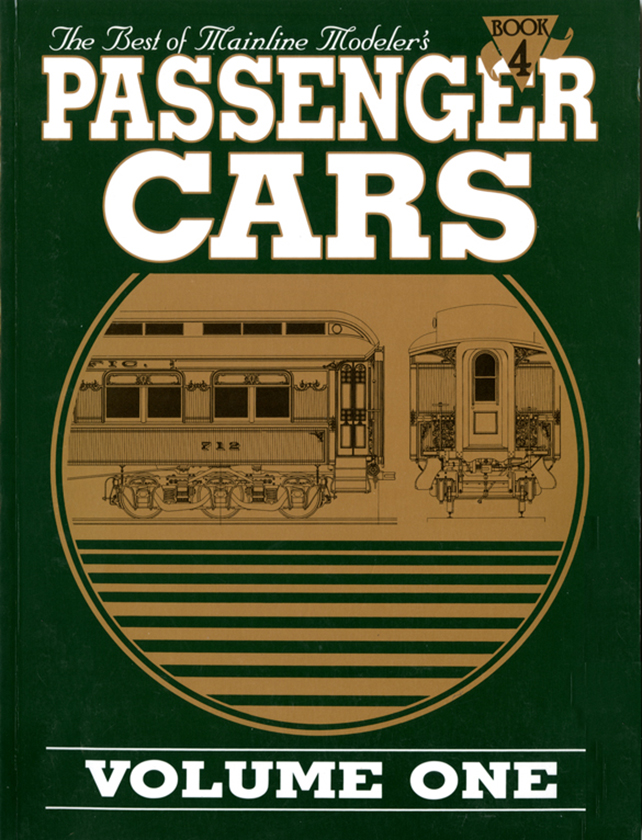
The AHM heavyweight Pullman can readily be kitbashed into a number of other floor plans, as shown in a superb series of articles in Mainline Modeler, in five issues during 1981. Magazine issues can be hard to find, on-line or elsewhere, but a perhaps easier source for these articles are the verbatim reprints of all five articles, contained in the Mainline Modeler reprint book shown below.

An essential source of information and photographs, for the Southern Pacific modeler, is the five-volume series of books entitled Southern Pacific Passenger Cars and published by the SP Historical & Technical Society. For the present topic, Volume 2 on sleeping cars was vital.

In addition to the many important pieces of information about individual cars in the book shown above, there is another SPH&TS book of great importance also, the painting and lettering guide. Both can be purchased on-line and the latter from the Society at its website.

Here are references for the five most important books mentioned in the talk: 

___________, The Best of Mainline Modeler’s Passenger Cars, Volume 1, Hundman Publications, Seattle 1991.

Cauthen, Jeffrey Alan, and John R. Signor, Southern Pacific Painting and Lettering Guide (“Locomotives and passenger cars, 1913–1996”), SPH&TS, Upland, CA, 2019.

 Ryan, Dennis and Joseph Shine, Night Trains of the Coast Route, Four Ways West, La Mirada, CA, 1986.

SPH&TS, Southern Pacific Passenger Cars, Volume 2, Sleepers & Baggage-Dormitories, SPH&TS, Pasadena, 2005.

Wayner, Robert, Pullman Company Descriptive List of Cars, 1950, Wayner Publications, New York, NY, 1985.

In the talk, and in the MRH articles mentioned in the first paragraph, I showed a variety of sleeping cars  cars that I was able to build from the AHM sleeping car models. The MRH articles contain extensive bibliographies. Much if not all of the material was previously shown in my blog; links are below.

First, some links to basic passenger car modeling, the concluding posts in each series:

https://modelingthesp.blogspot.com/2014/09/modeling-sp-passenger-cars-sleepers.html

https://modelingthesp.blogspot.com/2014/07/modeling-sp-passenger-cars-heavyweight.html

https://modelingthesp.blogspot.com/2018/02/my-pullman-projects.html

https://modelingthesp.blogspot.com/2018/05/the-problems-of-dark-olive-green.html

https://modelingthesp.blogspot.com/2022/11/heavyweight-sleepers-conclusion.html

https://modelingthesp.blogspot.com/2023/10/modeling-sp-passenger-cars-part-18.html

I have also written extensively about passenger car diaphragms, full width and otherwise:

https://modelingthesp.blogspot.com/2014/06/modeling-sp-passenger-cars-part-5.html

https://modelingthesp.blogspot.com/2021/05/passenger-car-diaphragms-part-2.html

https://modelingthesp.blogspot.com/2021/08/full-width-diaphragms-part-2.html

https://modelingthesp.blogspot.com/2021/08/full-width-diaphragms-part-3.html

https://modelingthesp.blogspot.com/2021/07/passenger-car-diaphragms-part-4.html

Among the other blog posts that may be informative, here are two about the Lark:

https://modelingthesp.blogspot.com/2021/07/modeling-sp-passenger-cars-part-11-lark.html

https://modelingthesp.blogspot.com/2021/07/the-challenge-of-full-width-diaphragms.html 

With these links, it should be possible to see the background modeling in more detail than was possible to present in a single talk, or for that matter, in the two MRH articles. In addition, most of the above posts that are linked contain significant prototype information too.

Tony Thompson


Thursday, September 15, 2022

Handout: modeling transition-era SP motive power

 This handout is to provide background and readily available on-line resources in support of the talk, along with printed book and magazine resources. The primary foundation for this presentation was my article in Model Railroad Hobbyist for February 2019, entitled “Developing a realistic loco fleet.” It was part of the “Running Extra” portion of the issue, can be downloaded at: www.mrhmag.com

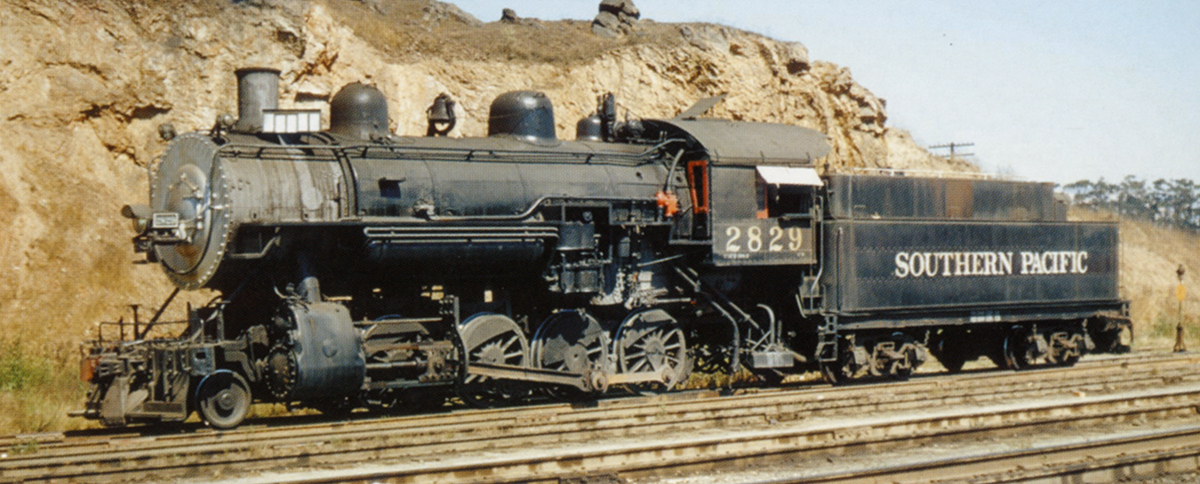
A point of emphasis in the talk is appropriate prototype locomotives to model, nearly all based on known locomotive assignments. One of my favorite SP locomotives is Class C-9 Consolidation 2829, shown here at San Luis Obispo, where it was assigned for years (Dallas Gilbertson photo).

But of course one draws inspiration from elsewhere on the Southern Pacific; most locomotive types operated on numerous divisions across Pacific Lines. An obvious example is the “signature” SP steam power, the cab-forward. The image below, taken west of Roseville in June 1956 (Jack Bowden photo) shows a freshly painted 4163 with a reefer block.

I begin my sources of additional information to supplement the talk, with a fair number of my blog posts on these topics. In most cases, the link includes enough of the post title to inform you of what is included. These have been listed chronologically.

General discussion about SP motive power rosters:

https://modelingthesp.blogspot.com/2011/04/choosing-1953-locomotive-roster.html

Steam motive power modeling:

https://modelingthesp.blogspot.com/2011/05/sp-steam-power-in-early-1950s.html

https://modelingthesp.blogspot.com/2014/02/southern-pacific-f-unit-diesels.html

https://modelingthesp.blogspot.com/2016/12/locomotives-for-layout.html 

https://modelingthesp.blogspot.com/2018/07/sps-whaleback-tenders.html

https://modelingthesp.blogspot.com/2018/12/the-sp-4-8-2-from-athearn.html

https://modelingthesp.blogspot.com/2020/03/sd-locomotives-on-sp.html

Diesel chronology and modeling:

https://modelingthesp.blogspot.com/2011/03/modeling-diesel-locomotive-chronology.html

https://modelingthesp.blogspot.com/2011/06/modeling-diesel-locomotive-chronology-2.html

https://modelingthesp.blogspot.com/2022/05/diesel-chronology-modeling.html

https://modelingthesp.blogspot.com/2022/08/baldwin-road-switchers.html

There are a great number of books containing excellent historical information and considerable photo coverage of all the kinds of motive power I discussed. As I showed in the talk, there are lots of titles about the entire SP, but for my Coast Division topic, these are especially valuable, and each is included in the list below:

I will admit in the following list, to being more rather than less inclusive, in the interest of completeness. Many of the items shown are out of print, but are readily found for sale from on-line book dealers.


Church, Robert J., Cab-Forward (Revised Edition), Central Valley Railroad Publications, Wilton, CA, 1982.
   
Church, Robert J., The 4300 4-8-2’s (Revised Edition), Signature Press, Wilton, CA, 1996.
   
Crossley, Rod, Chasing the SP in California, 1953-1956, SP Historical & Technical Society, Upland, CA, 2011.
   
Diebert, Timothy S., and Strapac, Joseph A. Southern Pacific Company Steam Locomotive Compendium, Shade Tree Books, Huntington Beach, CA, 1987.
   
Dill, Tom, Southern Pacific’s Scenic Coast Line, Four Ways West Publications, La Mirada, CA, 2003.   

Dunscomb, Guy L.,  A Century of Southern Pacific Steam Locomotives,  2nd Edition, Guy L. Dunscomb and Sons, Modesto, CA, 1972.
   
Garmany, John Bonds, Southern Pacific Dieselization, Pacific Fast Mail Publications, Edmonds, WA, 1985.
   
Gilbertson, Dallas, California Rails 1950, Four Ways West Publications, La Mirada, CA, 2008.
   
Menke, Arnold, “The Compendium Companion,” A. Menke, Bisbee, AZ, various editions.
   
Southern Pacific, Annual Report, San Francisco, 1954.
   
Strapac, Joe, “Three Decades of Southern Pacific F Units,” Trainline (magazine of the SP Historical & Technical Society), issue 66, Winter 2001, pp. 8–25.
   
Strapac, Joseph A., Southern Pacific Historic Dieselss, Vol. 4, “SD7 and SD9 Locomotives,” Shade Tree Books, Bellflower, CA, 1997.
   
Strapac, Joseph A., Southern Pacific Historic Diesels, Vol. 8, “Alco Roadswitcher Locomotives,” Shade Tree Books, Bellflower, CA, 2001.
   
Strapac, Joseph A., Southern Pacific Historic Diesels, Vol. 10, “EMD Freight F Locomotives,” Shade Tree Books, Bellflower, CA, 2003.
   
Strapac, Joseph A., Southern Pacific Historic Diesels, Vol. 11, “Baldwin Switchers and Roadswitchers,” Shade Tree Books, Bellflower, CA, 2005.
   
Strapac, Joseph A, Southern Pacific Historic Diesels, Vol. 18, “Alco and GE Diesel Switchers,” Shade Tree Books, Bellflower, CA, 2013.
   
Strapac, Joseph A. Southern Pacific Diesel Locomotive Compendium, Vol. 1, Pre-1965, Shade Tree Books, Bellflower, CA, 2004.
   
Thompson, Anthony, “Modeling a Southern Pacific Alco S2 with tiger stripes,” Railroad Model Craftsman, Vol. 56, No. 12, May 1988, pp. 54–57.
   
Thompson, Anthony W., and Signor, John R., Coast Line Pictorial, Signature Press, Wilton, CA, 2000.
   
Thompson, Tony, “Southern Pacific Diesel Locomotive Chronology,” Trainline (magazine of SPH&TS), issue 29, 1992, pp. 18–23.  

Thompson, Tony, “Notes on Modeling Espee F Units,” Trainline (magazine of SPH&TS), issue 66, Winter 2001, pp. 25–29.
   
The books and magazine articles listed above will provide a far more complete picture of my subject than it is possible to do in a single talk. I hope these resources prove valuable.

Tony Thompson

Friday, May 13, 2022

Handout: layout operations

 This post constitutes a handout for a talk on operation of my layout. I have come to prefer a handout in this form because it can easily be updated or corrected, even in real time, and can contain live links to a variety of on-line resources, neither of which is true of paper handouts. In addition, it can readily include color graphics and other resources that get complicated to reproduce on paper. 

This particular talk is about my layout goals, both the prototype aspects and the modeling goals. It also includes a segment on the waybills I use, as a route to more realistic operation. This means finding out about freight traffic on the prototype. I have benefited by the information in an SP conductor’s time book, as shown here:

http://modelingthesp.blogspot.com/2011/02/modeling-freight-traffic-coast-line.html

My layout design and goals are derived from the SP prototype. Below is one example (Dallas Gilbertson photo, Tom Dill collection) of the kind of operation I want to model. It shows the Guadalupe Local, at Hadley as it departs San Luis Obispo, with Consolidation 2752 operating tender-first. The crew had to choose which direction they would operate in this configuration, as there were no turning facilities at Guadalupe.

For background on my layout locale and modeling approaches, for the Southern Pacific Coast Division in 1953, I would recommend these two posts:

https://modelingthesp.blogspot.com/2019/08/conveying-ones-layout-locale.html

https://modelingthesp.blogspot.com/2012/04/coast-line-operations-1953-for-my.html

For more on waybills, there are numerous sources, including an article in Model Railroad Hobbyist. Below are a couple of links, the first to the MRH article description, but these extend far beyond these two write-ups. Sub-topics within the subject of waybills can readily be found by using the search box at top right of all posts, and selecting a search term for the specific interest that you have.

https://modelingthesp.blogspot.com/2017/12/my-new-column-in-model-railroad-hobbyist.html

https://modelingthesp.blogspot.com/2014/09/waybills-part-34-one-piece-waybill.html

Below is a summary, showing all the information contained in my model waybills. This closely mirrors the prototype waybill.

When all these elements come together — the prototype-oriented layout design, the trains and the freight cars, and the waybills that make it all function —  can enjoy something like the photo below, a Santa Rosalia Branch local, having finished its work on the branch and returning westward with the cars it picked up, heading to Shumala.

This talk has been interesting to prepare, as it brings together several threads of topics long discussed, but usually only separately. It has been a pleasure to look at all of them at once, and bring them together into a presentation.

Tony Thompson

Saturday, September 26, 2020

Handout: PFE models

Today I have presented a talk in the virtual meeting, “Hindsight 20/20 RPM,” which has been a monthly all-day event of presentations via Zoom. My talk was entitled “Improving the Accuracy of Pacific Fruit Express Models.” I thank Ted Culotta and friends for making this happen.
     Virtual handouts like this one have the advantage that they can include live internet links and are thus much more convenient to use. There were a number of on-line resources mentioned in the talk, and a few tabular materials, so this handout is intended to provide them in convenient reference form.
     I summarized the history of PFE paint schemes up to 1960 somewhat quickly in the talk, and mentioned then that the summary list of schemes would be in the handout. Here is that slide:


This of course is very much “once over lightly,” and should not be a substitute by a modeler for information from the PFE book or the SPH&TS lettering book (both those citations are below).
     One thing I talked about was correcting commercial lettering on PFE models, not only the lettering that is delivered on ready-to-run cars, but decals as well. In recent years, Microscale had hugely increased the quality and accuracy of their PFE decal sets (with Dick Harley’s digital lettering), but at one time it was fairly lame.
     Below I show, at left, a 1990s model lettering job, at center the prototype, which has numerals visibly far more condensed that the stuff at left, and at right, correcting the numerals with the current Microscale 87-414 or 87-501 set. (You can click on the image to enlarge it if you wish.)


     I have been giving various kinds of talks about PFE for probably 30 years, but have always concentrated on the prototype. And in this talk too, I certainly included some prototype information, while at the same time explaining that there is far more in published books than could possibly be in any oral presentation. To that end, I recommended two books and two articles in the on-line magazine Model Railroad Hobbyist (articles obtainable for free at www.mrhmag.com ), as follows:

Anthony W. Thompson and Dick Harley, Southern Pacific Freight Car Painting and Lettering Guide (SP Historical & Technical Society, Upland, CA, 2016).

Anthony W. Thompson, Robert J. Church, and Bruce H. Jones, Pacific Fruit Express (2nd edition, Signature Press, Berkeley and Wilton, CA, 2000).

Tony Thompson, “Pacific Fruit Express, Part One: Delivering perishables across the nation,” Model Railroad Hobbyist, “Getting Real” column, September 2013.

Tony Thompson, “Pacific Fruit Express, Part Two: Modeling PFE cars,” Model Railroad Hobbyist, “Getting Real” column, October 2013.

Note that the fourth of these, the MRH article from October 2013, is about modeling, and is fairly detailed.
     I will add links to a number of my prior blog posts about PFE models in a moment, but first, here is the table of car classes included in the talk.


This table contains the principal car classes in the PFE roster, as shown in the Official Railway Equipment Register, for January 1953, and shows the number of cars in each class at that time.
     The table includes a column at far right that shows how many models of each class you would need if you chose to model one car for every 1000 prototype PFE cars. That I have captured pretty much all of the PFE fleet is shown by comparing the total number of cars listed (37,684) with the actual fleet size, 38,565.
     One message I always emphasize about the table above is the very large size of Class R-30-9, some 7700 cars originally so classified and over 7100 even in 1953. I showed in the talk an example of a model of this class, in the 1946 paint scheme and presumably recently washed, by its clean appearance.


     As mentioned, I have posted frequently in my blog about all kinds of issues with PFE car models, and below is a fair (though not exhaustive) selection of them, in chronological order. You can find more of them by using “PFE” as a search term in the search box at the upper right corner of this post.

“Correcting a brass model of a PFE car,” May 25, 2013, https://modelingthesp.blogspot.com/2013/05/correcting-brass-model-of-pfe-car.html

“Replacing bad decals,” May 13, 2016, https://modelingthesp.blogspot.com/2016/05/replacing-bad-decals.html

“The ‘bad decal project,’ Part 2,” May 16, 2016, https://modelingthesp.blogspot.com/2016/05/that-bad-decal-project-part-2.html

“PFE lettering after World War II,” June 26, 2016, http://modelingthesp.blogspot.com/2016/06/pfe-lettering-after-world-war-ii.html

“PFE lettering post-WW II, Part 2,” June 29, 2016, https://modelingthesp.blogspot.com/2016/06/pfe-lettering-post-ww-ii-part-2.html

“Correcting a ready-to-run car, March 20, 2018, https://modelingthesp.blogspot.com/2018/03/correcting-ready-to-run-car.html

“Small rant: manufacturer lettering, April 13, 2019, https://modelingthesp.blogspot.com/2019/04/small-rant-manufacturer-lettering.html

“PFE paint schemes — again,” September 6, 2019, https://modelingthesp.blogspot.com/2019/09/pfe-paint-schemes-again.html

     As always, I hope this handout material will enlarge whatever impression viewers have taken away from my talk, and will provide background and depth for the material I presented.
Tony Thompson

Saturday, August 22, 2020

Handouts: Tank car waybills

This post serves the purpose of a handout for a talk. Virtual handouts have the advantage that they can include live internet links and are thus much more convenient to use. This particular post relates to the “Hindsight 20/20” virtual RPM meeting of today, August 22, during which my talk was entitled “Tank Car Operations with Realistic Waybills.”
     This talk topic is interesting in that it combines two complex topics, tank cars and tank car operations in the prototype, and waybills, as they are specifically used for tank car traffic. Both topics readily provide material for full-hour talks or more, and in fact I have given such talks. This particular presentation was an effort to talk about the two topics together, necessarily briefly. Here are the further resources:
     For the tank car portion of the talk, there is a fairly complete tank car handout, containing the drawings shown and other images, at this post, linked to Google Drive.

https://modelingthesp.blogspot.com/2013/01/new-tank-car-handout.html

In addition, I wrote a two-part article for Model Railroad Hobbyist (MRH), which appeared in the issues for February and March, 2016. These are still available for free, to read online or to download for your own use, at their web site, www.mrhmag.com . The first article is about prototype tank cars, the second article is about tank car modeling.
     Lastly on tank cars, I have written blog posts about any number of model tank car projects, and they can most easily be found by using the blog search box at upper right, using such search terms as “tank cars” or perhaps “tank car models.” Below is shown one of my favorite photos from the clinic, a Stauffer acid tank car (Richard Hendrickson collection), clearly showing the distinctive dome of such cars.


     The waybill part of the talk has even more background. I have written several articles for publication, two of the most recent being one in MRH, the issue for January 2018 and still available, like the articles mentioned above about tank cars, and one for The Dispatcher’s Office (magazine of the Operations SIG on NMRA), in the issue for October 2016.
     More significantly for the present moment, there are some on-line resources. These are in two forms: first, handouts for talks, and second, collected batches of posts, which may also be helpful. Here is a link to a recent handout, likewise available on Google Drive.

https://modelingthesp.blogspot.com/2020/01/handout-for-new-waybill-talk.html

This above link also provides links to an earlier handout, with somewhat different material.
     Secondly, as I mentioned, there are some collected sets of waybill posts. Mike White collected my first 26 posts on the topic, as available at this link: https://modelingthesp.blogspot.com/2013/02/waybills-27-collected-posts.html . Subsequently Mike also collected the next 20 posts, along with some related posts about operations which touched on waybills, and that set is available here:

https://modelingthesp.blogspot.com/2015/12/waybill-posts-collected.html

Since those posts, I have slowly added perhaps 20 more beyond what Mike collected.These are readily found in the blog archive by using the search box at upper right of this post, and using a search term such as "waybills," or better yet, using the series title, “Waybills, Part,” which is how I have named each numbered Part.
      Included in the talk was a brief mention of the larger (5 x 7 inches) waybills I have recently assembled for a friend’s layout, and no, I am not heading that direction myself; below I show one of the small waybills (2.5 x 3.5 inches) that remains standard on my layout, at left, and at right the larger format. Both bills were chosen to be for tank cars. (Development of the larger form was described in a previous blog post; you can find it here: https://modelingthesp.blogspot.com/2020/06/waybills-part-69-another-approach.html .)


     Beyond this, if there are still questions, please contact me directly and I will be happy to try and answer or clarify any issues.
Tony Thompson


Thursday, January 23, 2020

Handout for new waybill talk

Over the last decade I have given a number of talks at model railroad meetings, about the linked topics of prototype waybills and how to model those waybills. This material has also been presented to a series of magazine articles in the same period. My old handout for this series of talks, dating back to 2012, is now somewhat outmoded, and accordingly is being updated with this post. (Here is a link to the old handout, if you’re interested: http://modelingthesp.blogspot.com/2012/05/handout-for-waybills-talk.html .)
    At one time, it was my practice to distribute paper handouts at talks, but a multi-page handout, though not excessively expensive to reproduce, does get a bit cumbersome and bulky to transport. Sometimes I have run out of enough copies if I haven’t correctly predicted the audience, and in some cases people who weren’t able to attend the talk in person would like to get a copy afterward. For all these reasons, it seems to me that what might be called a “back-up electronic copy” on the Internet is a sensible idea.
     For my current waybill talk, I have made a PDF version of my edited handout, and have placed it on Google Docs, where you are free to download it if you like. Here is the link:

https://drive.google.com/file/d/0Bz_ctrHrDz4wcjJObUFxVG0xTzA/view?usp=sharing


     The handout document contains a brief text summary of several points which are made in the talk, has a summary Car Service Rules page, and a few examples of my current waybills, along with a fairly complete bibliography. (Many topics in the talk and in the handout are developed much more fully in my series of magazine articles listed in the handout bibliography.) The handout also contains copies of two prototype waybills, one of which is the Illinois Central one with all the stamps and handwriting on it.
     It is worth mentioning that all the material in this handout and this talk has also been discussed in a series of posts to this blog, so regular readers will find nothing new. The handout also cannot measure in length and extent what has been offered in the series of magazine articles — as I said, fully cited in the handout. But it does collect the core topics of the oral talk in one place. Hopefully this is an added convenience for some readers.
Tony Thompson

Tuesday, January 7, 2020

Handout for typography talk

This post constitutes a handout for a talk entitled “Using Typography in Model Railroading.” Its foundation is a blog post from some years ago, which I would regard as a kind of “Part 1” to this handout; it can be found at: http://modelingthesp.blogspot.com/2011/11/type-and-typography-on-layout.html .
     Many of the basic descriptions of type language and concepts came from a superb book by designer Robin Williams, The Non-Designer’s Design Book (Peachpit Press), now in its fourth edition. I highly recommend it to anyone looking for a really basic, clear and instructive book. And the prior editions, available for lower prices on the internet, can do almost entirely the same job.
     In the talk, I mentioned a number of typefaces, old and new. The list of them, including their original creators and date(s), is below.


     Sometimes you may see a font, in a prototype photo or in a magazine, that you really would like to try for signage. Provided your sample contains a fair number of different characters from the type, you can go to an amazing site on line that will (usually) be able to tell you what font it is after you answer a set of questions. Here is the link: http://www.identifont.com .
     I also listed some sources on line for free or cheap fonts. Here are a bunch of them:


And if you find a font somewhere that you really like, but it’s not cheap, go to www.fontspring.com and enter the name of the font you like. The site will give a bunch of fonts that are darn close though not identical to the one you like, and there may well be free ones in the list.
     By the way, I support type designers who may be charging for fonts, and I always am happy to pay for them, even shareware, when that is called for. But I realize many people don’t want to invest much in fonts, so I have offered some ways to find useful ones that are cheap or free.
     I mentioned some publications in passing that I list here, just in case anyone might want to  pursue them. One is Lance Mindheim’s book, Model Railroading as Art (CreateSpace.com), which I reviewed recently in this blog (see the commentary at: https://modelingthesp.blogspot.com/2019/06/lance-mindheims-fine-new-book.html ). Another is William Gordon’s book for sign painters,  Modernized Methods in the Art and Practice of Lettering for Commercial Purposes (Signs of the Times Publishing). And I did mention Tony Koester’s How to Kitbash Structures (Kalmbach).
     In concluding, I listed a few books that I thought might repay those interested in delving into type a little further. In addition to Robin Williams’ book, mentioned above, I showed Ruari McLean’s fine basic book, Manual of Typography (Thames and Hudson), and Robert Bringhurst’s magisterial overview, The Elements of Typographic Style (Hartley and Marks).
     My closing remarks included a list of these “Do’s and Don’ts” (you may need to click on the list to enlarge it to be readable):


     It was an interesting challenge to dig through my own experience and resources to assemble this material. Having been the designer and typographer as well as the layout person for numerous books for Signature Press over the last 25 years or so, I do have some background in typography, and I continue to find it an intriguing topic. I hope I conveyed that enthusiasm in this talk.
Tony Thompson

Friday, January 26, 2018

Handout for traffic talk

This handout is for a new clinic presentation about prototype traffic and how to model it. A major part of the handout is the references to the various published articles and books mentioned in the talk, along with a few links to prior posts in this blog on related topics.
     No, this clinic isn't about waybills (except in passing). It's about freight traffic, and the point is that the needs of traffic give rise to waybills, not the other way around. To create realistic traffic flow on a layout, the starting point is understanding each layout industry, then creating traffic patterns to serve each industry's needs. One can then add as much detail as desired, drawn from knowledge of each industry type, and resources to do so are described. Examples from a wide range of industries are included as illustrations. 
     One source of information emphasized in the talk is the four Kalmbach volumes by Jeff Wilson, a series entitled Industries Along the Tracks. Complete citations for the four books are given in the bibliography below under the author’s name (Wilson). Here are the four covers.


Listed next are the contents or topics included in each volume, six topics in every case.

Vol. 1: grain, petroleum, coal mining, automotive, produce, livestock
Vol. 2: coal customers, milk & dairy, breweries, paper, iron ore, package & LCL
Vol. 3: ethanol, cement, sugar beets, canning, trailers & containers, team tracks and transloading
Vol. 4: salt mining, coal gas, brickyards, quarries, lumber, waterfront ops


      There are a fair number of other publications referenced or recommended in the course of the talk. Citations of all of them are listed below. Many of these books are out of print, but are readily available used from a wide range of on-line booksellers.
     Several of the topics touched on in the presentation have been the subject of multi-part threads in this blog. Starting-point links to the various posts are given below as part of the bibliography.
     This has been an interesting clinic to assemble, and as readers of this blog will know, it draws on and expands a number of previous posts developed for the blog. It’s a new development to combine the various parts into a single talk. Hopefully it proves interesting and useful to those who attend it.
Tony Thompson

Bibliography

Amfahr, Mark, “Bay Area Auto Shipments in the Postwar Years,” The Streamliner (magazine of the Union Pacific Historical Society), issue for Spring 2016.

Armstrong, John H., The Railroad–: What It Is, What It Does (Chapter 8, Railroad Operations), Simmons-Boardman Publishing, Omaha, 1982. [there are several subsequent editions with updates; the original is closest in time to the era I model]

Chubb, Bruce, How to Operate Your Model Railroad, Kalmbach, Milwaukee, 1977.

Coughlin, E.W., Freight Car Distribution and Handling in the United States, Car Service Division, Association of American Railroads, Washington, 1956.

Ellison, Frank, “The Art of Model Railroading, Part 6,” Model Railroader, August 1944, pp. 342–347; reprinted as “The Art of Operation” in Model Railroader, January 1965, pp. 52–55.

Frailey, Fred W., Blue Streak Merchandise, Kalmbach Books, Waukesha, WI, 1991.


Koester, Tony, Realistic Model Railroad Operation, Kalmbach, Waukesha, WI, 2003 (2nd edition, 2013).

Mallery, Paul, The Complete Handbook of Model Railroad Operations, TAB Books, Blue Ridge Summit, PA, 1979, esp. Chapter 7, pp. 133–174.


Million, Arthur B., and Paton, John C., The Pere Marquette Revenue Freight Cars, Hundman Publishing, Mukilteo, WA, 2001.

Sagle, Lawrence W., Freight Cars Rolling, Simmons-Boardman, New York, 1960.


Sebastian-Coleman, Laura (editor), America’s Driving Force, Walthers, Milwaukee, 1998.

Thompson, Anthony W., Church, Robert J., and Jones, Bruce H., Pacific Fruit Express (2nd edition), Signature Press, Berkeley and Wilton, CA, 2000.

Thompson, Anthony, Southern Pacific Freight Cars, Volume 3, Automobile Cars and Flat Cars, Signature Press, Berkeley and Wilton, CA, 2004; see also Volume 4, Box Cars, Signature Press, 2006.

Thompson, Anthony, “Freight Car Handling and Distribution,” The Dispatcher’s Office, Vol. 17, No. 4, pp. 28–31, October 2011.
  [correct version available at: http://modelingthesp.blogspot.com/2011/09/my-article-in-dispatchers-office.html ]

Thompson, Tony, “Operations: Demand-based car flow,” blog post, 7 November 2011, three-part series; see for example: http://modelingthesp.blogspot.com/2011/11/operations-demand-based-car-flow-2.html


Thompson, Tony, “Modeling a Bulk Oil Dealer,” Getting Real column, Model Railroad Hobbyist, issue for March 2014.  (always available for free at: www.mrhmag.com )

Thompson, Tony, Seasonality of Produce Shipping, see for example: http://modelingthesp.blogspot.com/2015/09/seasonality-of-crops-and-traffic.html and also summarized recently in Model Railroad Hobbyist for January 2018. (always available for free at: www.mrhmag.com )

Union Pacific, Official Freight Shipper Guide and Directory, UP, 1938. This and about a dozen others are available from Rails Unlimited, as you can see on their web site, http://railsunlimited.ribbonrail.com/Books/shippers.html .

Wilson, Jeff, The Model Railroader’s Guide to Industries Along the Tracks, Kalmbach Books, Waukesha, WI. Volume 1, 2004; Volume 2, 2006; Volume 3, 2008; Volume 4, 2010.

Wilson, Jeff, Railroading and the Automobile Industry, Kalmbach Books,  Waukesha, WI, 2019.

Tuesday, January 2, 2018

New handout on weathering

Six years or seven ago, Richard Hendrickson and I put together a clinic with the title, “Weathering Transition-era Freight Cars.” I have organized a new version to modernize and update that clinic (it will be presented this week at Cocoa Beach and, later, at other meetings). But the point of the clinic remains the same. Making freight car models more or less weathered and dirty, as appropriate for each case, is essential for prototypical realism. The clinic emphasizes that there are a wide range of techniques for weathering, and to a significant extent, these are summarized in the Reference Pages shown as links at the top right of this blog page.
     Several quite different approaches, all of which work very well, are presented and illustrated in the reference pages, and are given updated illustrations in the clinic. These can be used singly or together, and viewers were encouraged to develop their own combination of techniques for weathering models realistically. The present blog post is intended to guide readers to past posts in this blog about the content of the clinic (other than the Reference Pages).
      One of the techniques explored in more depth in the new clinic is the use of artist’s colored pencils, both for varying individual board colors in wood-sheathed cars, car floors, or wood running boards, but also for overall weathering of entire cars. A recent post on the basic approach with these pencils is at this link: http://modelingthesp.blogspot.com/2017/12/artists-colored-pencils-for-modeling.html . An earlier post about just the running board aspect is here:  http://modelingthesp.blogspot.com/2016/01/running-boards-part-2.html .
     The original clinic had an abbreviated handout, just a single page, collecting together the various tools and materials illustrated in the clinic. In light of the various changes in the current clinic, that handout has been edited and updated. Here is the new single-page handout, as an image you can read here (you can click to enlarge it) or download from: https://drive.google.com/file/d/1KFYPIuSCi1AUDw43Oaw_JqM7d7fnZk9h/view?usp=sharing .


     Last summer, I wrote a post about the very interesting rust decals from Weathering Solutions. This post can be found at: http://modelingthesp.blogspot.com/2017/07/using-weathering-solutions-decals.html . These are mostly suitable for much more modern rolling stock, but some sheets of the decals are quite usable, as I showed in the blog post just cited.
     I hope these brief update comments help guide understanding of weathering approaches, while also serving to make available a handout (and some links to relevant blog posts of the past) for this new clinic.
Tony Thompson